Sterilization piercing studio work is not a marketing line on an “About” page — it’s the difference between a piercing or tattoo that heals quietly and one that leads to infection, inflammation, or a bloodborne illness. In a professional studio, sterilization is built into every step: from the initial cleaning of a tool to the moment a sterile pouch is opened in front of your eyes. This guide explains exactly how it works, including the methods leading studios use, like Statim and daily Helix testing — and what to check before you sit down in the chair, at any studio, not just ours.
Sterilization Piercing Studio Standards: A Baseline, Not a Recommendation
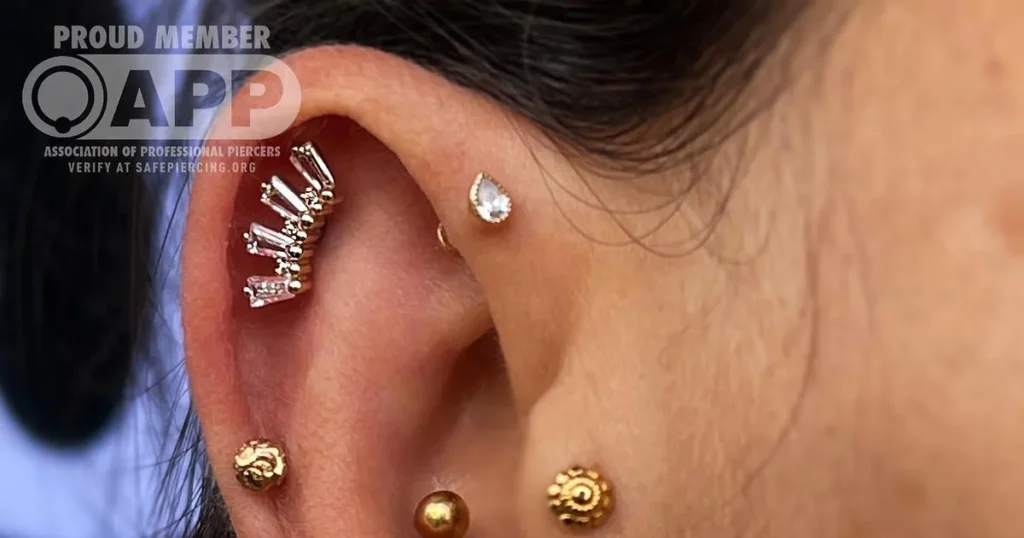
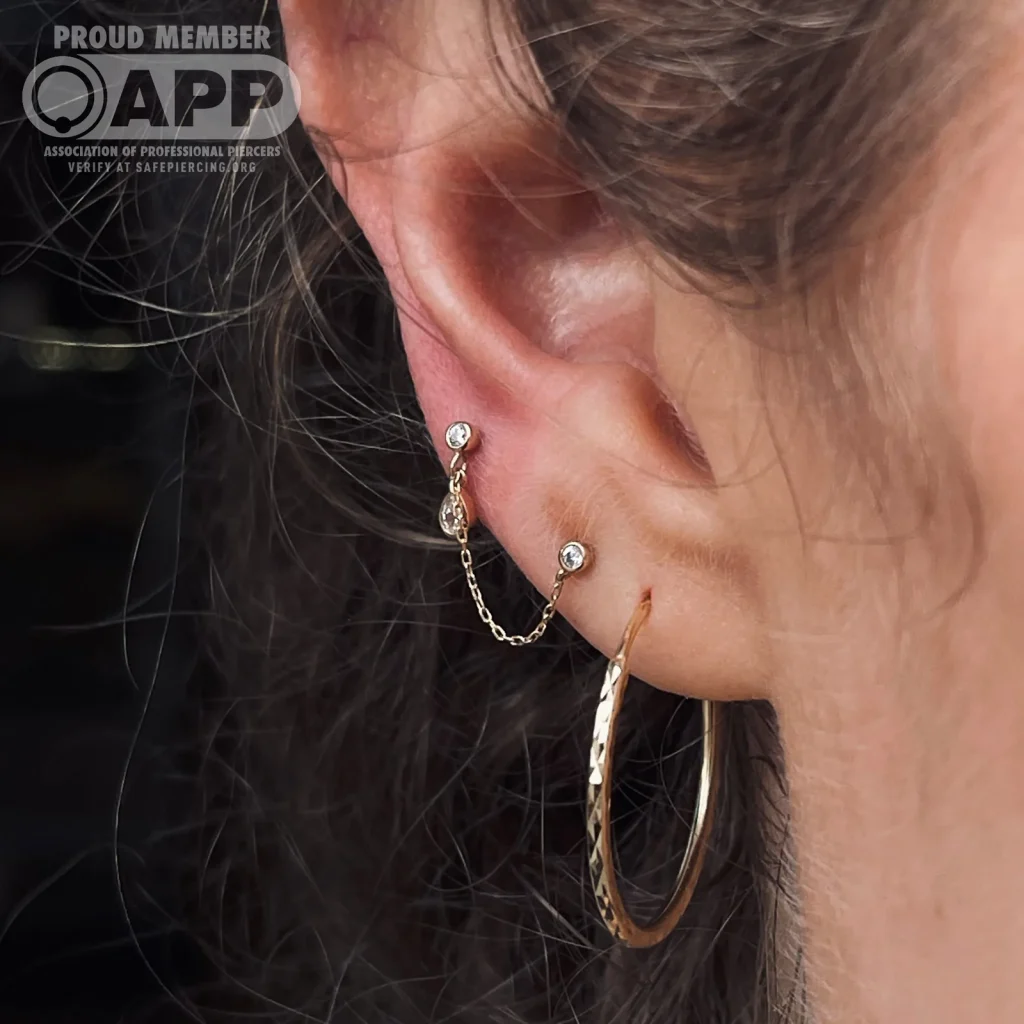
Both piercing and tattooing break the skin barrier — the layer that protects the body from bacteria, viruses, and fungi. A non-sterile tool, a reused needle, or a contaminated work surface can transmit bacterial infections, viral hepatitis (Hepatitis B and C), and in rare cases, HIV and tetanus. That’s why every professional body in the world, including the American APP (Association of Professional Piercers), sets proper sterilization as a membership requirement, not a marketing add-on.
Autoclaves: The Machine Every Safe Studio Needs
An autoclave is a device that sterilizes tools using high-pressure steam, typically above 121–134°C (250–273°F). This is not “disinfection” (wiping with alcohol or soaking in solution) — it’s full sterilization: the destruction of all microbial life, including resistant spores that require the most heat to kill. Soaking in a disinfectant solution is, at best, a pre-cleaning step, never a substitute for an autoclave.
Types of Autoclaves in a Professional Studio
Not all autoclaves are suitable for piercing work:
- Class B (with a pre-vacuum stage) — allows steam to penetrate hollow items like piercing needles, not just flat surfaces. This is the accepted professional standard in the industry.
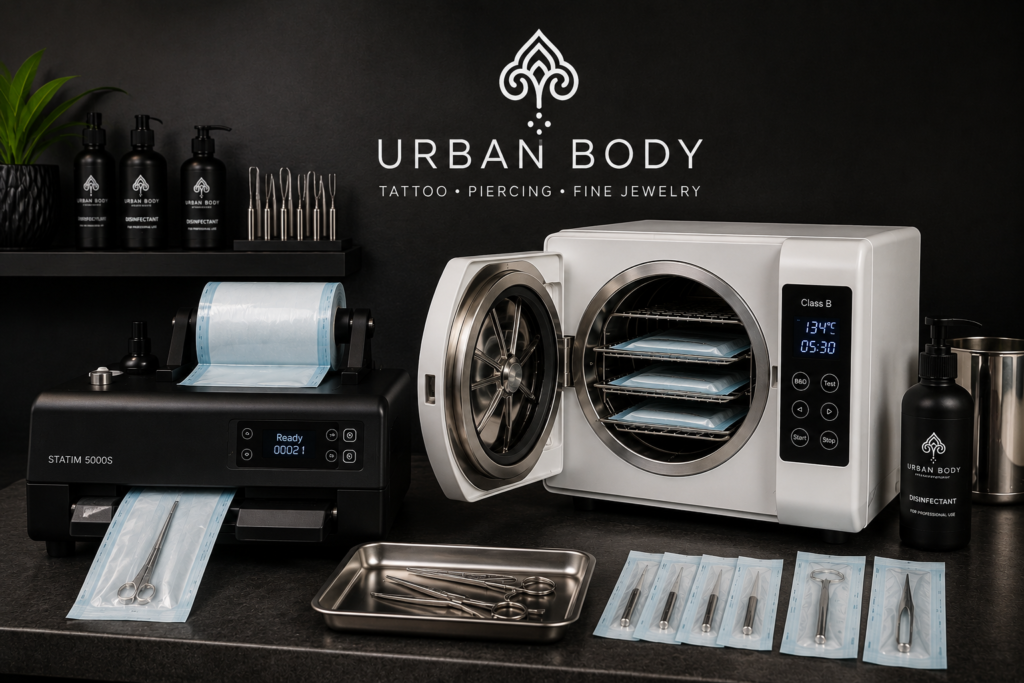
- Statim (cassette system) — a fast autoclave made by SciCan, very common in piercing studios thanks to short sterilization cycles and a closed cassette system that minimizes hand contact with sterilized tools between the end of the cycle and packaging. Busy studios running many appointments a day often use it alongside their main autoclave to keep a steady supply of sterile tools available all day.
Three Layers of Verification: How You Know Sterilization Actually Worked
A machine can look fine and still fail to sterilize effectively. A professional studio doesn’t rely on a single layer of verification — it relies on three, each checking a different parameter:
- Chemical indicator on every pouch — a strip that changes color when exposed to heat and steam. This proves the pouch “went through a cycle,” but doesn’t prove actual sterilization.
- Daily Helix test — a steam penetration test run every morning, before the first appointment of the day. A Helix device (a Process Challenge Device) simulates an especially hard-to-penetrate hollow instrument, with an indicator strip inside it. The strip goes through a full sterilization cycle (typically around 134°C for about 3.5 minutes), and its color change confirms that steam actually penetrated to the core of the item, not just around it. This is the daily test that verifies the machine is working correctly before the first client of the day.
- Periodic spore testing — a biological test that places resistant spores through a full sterilization cycle, then checks in an external lab whether they were destroyed. This is the only test that proves actual destruction of microorganisms at the required level, not just steam penetration. The professional standard is at least monthly testing, with leading studios doing it weekly, logging the date and result every time.
The three tests complement each other: the chemical indicator checks each pouch individually, the Helix test checks daily that the machine itself is penetrating steam correctly, and the spore test confirms weekly to monthly that sterilization is actually lethal at the required level.
Single-Use Tools vs. Reusable Tools
Not every tool in a studio goes through the same process:
- Piercing and tattoo needles — entirely single-use. Opened from a sterile pouch in front of the client, and disposed of immediately after use into a dedicated sharps container. A needle is never reused, even after sterilization.
- Piercing jewelry — quality manufacturers (like BVLA, Anatometal, Industrial Strength) almost never sell jewelry sterile out of the package. That means the jewelry goes through enzymatic cleaning and then autoclave sterilization at the studio itself, close to the appointment time, and is opened from its sterile pouch in front of the client.
- Reusable tools (forceps, handles, holding tools) — go through thorough enzymatic cleaning, packaging in self-sealing pouches with a chemical indicator, and then autoclave sterilization before every new use.
Sterile handling in the studio is only the first part of the process — what happens at home in the following weeks matters just as much for proper healing. Full details are available in our piercing aftercare guide and tattoo aftercare guide.
Behind the Scenes: What a Complete Process Looks Like
A standard sterilization process in a professional studio generally includes the following steps, repeated every day:
- Running a daily Helix test before treatments begin, to verify the autoclave is functioning correctly.
- Initial cleaning of every non-disposable tool, including removal of tissue or blood residue using an enzymatic cleaning agent.
- Packaging the tool in a self-sealing pouch with a chemical indicator.
- Running a full sterilization cycle in the autoclave, according to documented heat, pressure, and time parameters.
- Storing the sealed pouch until the moment of actual use.
- Opening the sterile pouch in front of the client, at the start of the treatment, not before.
- Ongoing logging in a sterilization journal: the result of the daily Helix test, and the results of periodic spore tests.
What to Check as a Client, Before You Sit in the Chair
You don’t need to understand autoclaves like a technician to recognize a safe studio. A few simple questions reveal a lot:
- Is the needle and/or jewelry opened from a sterile pouch in front of your eyes, not before you arrived?
- Does the staff put on fresh disposable gloves before every treatment, and change them if they touch something else mid-treatment?
- Is there a visible autoclave in the studio, not just a closed “back room”?
- Is the staff willing to show documentation of a daily Helix test and a recent spore test, when asked?
- Do the surfaces look clean, organized, and free of tools “lying around” between treatments?
The American APP frames points like these as basic rights of anyone about to get pierced — including the right to know that the piercer documents their sterilization protocols, and the right to refuse the procedure if something doesn’t feel right. The same logic applies fully to tattoos as well.
Why Piercing Guns Don’t Belong in the Picture
A point that keeps coming up in professional standards: a piercing gun (mainly used for earlobes in malls and jewelry stores) isn’t suitable for autoclave sterilization, because its internal parts are usually made of plastic that isn’t heat-resistant. In practice, the gun itself isn’t sterilized between clients, even if the plastic head is replaced. Professional piercing is always done with a sterile, single-use needle, not a gun, even for earlobes. This point applies to all types of ear piercings, not just lobes — our complete ear piercing guide shows just how different healing times are between the various types, and why the right studio and tools matter especially for cartilage piercings.
How This Looks at URBAN BODY
This is what sterilization piercing studio work looks like at URBAN BODY: every needle and every piece of jewelry is opened from a sterile pouch in front of the client, with no exceptions. The studio operates a Class B autoclave alongside a Statim system, and runs a Helix test every morning, before the first treatment of the day, to verify proper steam penetration into hollow items. Alongside that, periodic spore tests are performed and documented, and every reusable tool goes through enzymatic cleaning before each sterilization cycle. Avishay, the studio’s founder, is Israel’s first official APP member — a standard that requires strict adherence to hygiene and sterilization protocols as a condition of membership, not just a statement of intent.
Frequently Asked Questions
What’s the difference between disinfection and sterilization?
Disinfection reduces the amount of microorganisms but doesn’t eliminate all of them. Autoclave sterilization destroys all forms of microbial life, including resistant spores, and is the only method suitable for tools that contact blood or open tissue.
What is a Helix test and when is it performed?
A Helix test is a steam penetration test performed every morning, before work begins, using a device that simulates an especially hard-to-penetrate hollow instrument. The color change of the indicator inside confirms steam penetrated to the core of the item. This is a daily test, different from the periodic spore test.
Can a needle be reused after sterilization?
No. Piercing and tattoo needles are entirely single-use, even after sterilization. They’re disposed of immediately after use into a dedicated sharps container.
What’s the difference between a Class B autoclave and a Statim?
Class B is a type of autoclave with a pre-vacuum stage that allows steam penetration into hollow items. Statim is a fast autoclave with a closed cassette system, common in piercing studios thanks to short cycles and high tool availability throughout a busy workday. Many studios use both in parallel.
How do you verify a studio’s autoclave actually works?
Through three complementary tests: a chemical indicator on every pouch, a daily Helix test for steam penetration, and periodic spore testing that confirms actual destruction of microorganisms. Only the combination of all three gives a complete picture.
Does piercing jewelry arrive from the manufacturer already sterile?
In most cases, no. Quality manufacturers leave the sterilization step to the studio, so it happens as close as possible to the actual treatment time, inside a pouch that’s opened in front of the client.
Why are piercing guns considered problematic?
Their internal parts are usually made of plastic that isn’t heat-resistant, so they can’t be autoclave-sterilized between clients. Professional piercing is always done with a single-use sterile needle only, even for earlobes.
The Bottom Line
Good sterilization piercing studio practice is invisible when it’s working correctly, which is exactly why it’s easy to overlook when choosing a studio. But it’s exactly the thing worth asking about, checking, and confirming before starting any treatment. A studio that runs a Helix test every morning, logs spore tests, and is happy to proudly show you the process is the studio where it’s worth sitting in the chair.
For more on international standards on this topic, see the Association of Professional Piercers website.